
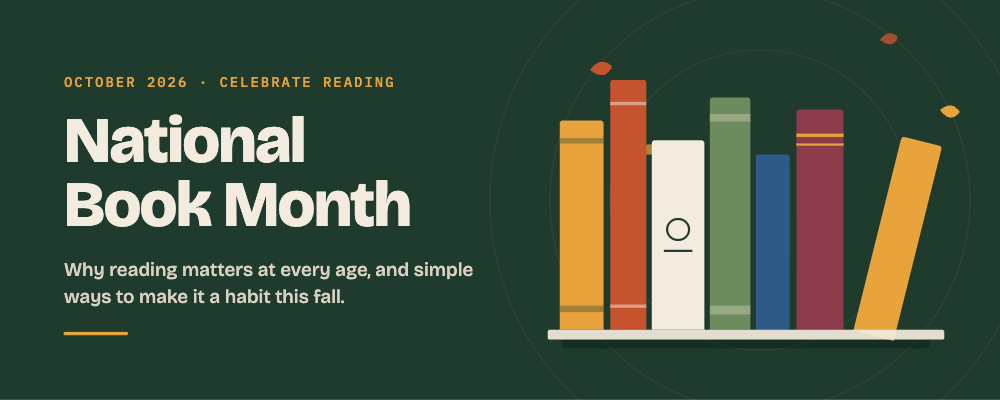
 Every October, readers across the United States celebrate the written word during National Book Month. This annual observance encourages people of all ages to pick up a book, explore new ideas, and build lasting reading habits. Books have long been recognized as one of the most powerful tools for learning, growth, and connection, and their benefits are well-documented and wide-ranging. Understanding the history and purpose of this month can inspire more people to make reading a regular part of their lives.
The History Behind National Book Month
National Book Month was established to draw public attention to the importance of books and literacy in everyday life. It grew from earlier efforts by the publishing and library communities to promote reading as a cultural and educational priority. The National Book Foundation, which also oversees the prestigious National Book Awards, has played a significant role in organizing and promoting the observance. Over the years, the month has expanded to include events, reading challenges, author appearances, and school programs, with libraries and bookstores across the country hosting activities that bring communities together. The goal has always been to make books more accessible, a mission that remains important as access to books in underserved communities continues to be a challenge.
Why Reading Matters at Every Age
For children, reading is one of the most foundational skills they will develop. Regular exposure to books builds vocabulary, comprehension, and focus, and research consistently shows that children who read frequently perform better across multiple school subjects. Stories featuring diverse characters also help young readers build empathy, while parents who read aloud help establish a positive relationship with books early on. Adults benefit just as much. Studies have linked regular reading to improved memory, reduced stress, and stronger analytical thinking, and fiction in particular has been shown to improve social cognition. For older adults, reading has been associated with a reduced risk of cognitive decline. Because published books typically go through editorial review, they also remain one of the most trusted sources of in-depth, reliable learning on virtually any topic.
How to Celebrate This October and Beyond
There are many simple ways to take part in National Book Month. Setting a personal reading goal, whether finishing one book or starting a reading list, is an easy first step. Branching out into a new genre or format, such as memoirs, history, science fiction, graphic novels, or audiobooks, can make reading feel fresh and exciting. Local libraries often offer free events, book clubs, and reading challenges, while schools can host author visits, book fairs, or read-aloud sessions. Sharing recommendations with friends, family, and online reading communities helps spread the spirit of the month. Most importantly, let October be a starting point rather than a finish line, since the small reading habits you build now can enrich your life long after the month ends.